

the spinal column
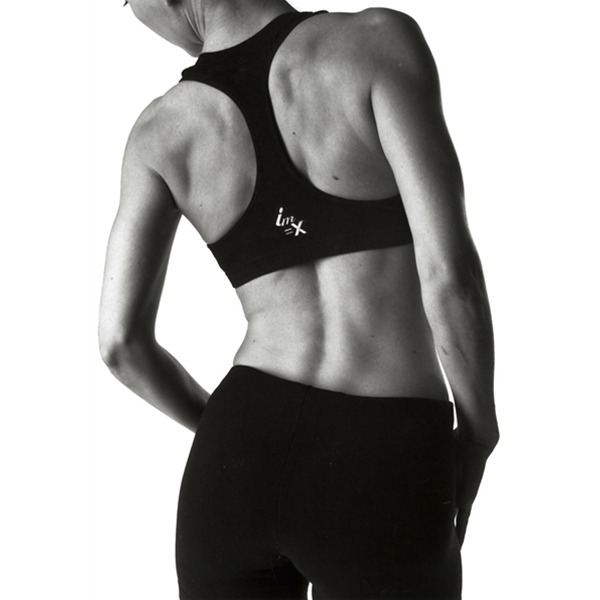
Your spine is comprised of a series of small bones called vertebrae. The vertebrae are arranged vertically in a column, hence the term “spinal column” or “vertebral column.” The spinal column is a very sophisticated structure that serves a number of functions. It holds your body in the upright position, supports your head, and is where the ribs and the muscles and ligaments of your back attach. It also encloses and protects your spinal cord, the part of your central nervous system that transmits messages back and forth between your brain and your body. It is very strong and flexible, and is designed to move in a wide range of motions.
The normal spine usually contains 33 vertebrae which fuse into a total of 26 bones. The vertebrae are classified according to the segment of the spine in which they are located.
The uppermost segment of the spine is in the neck region and is called the cervical spine. There are 7 vertebrae in the cervical spine, and when viewed from the side, it has a slight forward or convex curve.
The next segment is the thoracic spine, in the region of the upper back. It has 12 vertebrae and a slight backward or concave curvature.
Below the thoracic spine is the lumbar spine, or lower back, which has a convex curvature. There are 5 lumbar vertebrae, which are the largest and strongest and support the most body weight.
The last two segments of the spinal column are the sacrum and coccyx, which have a convex curvature. The sacrum is comprised of 5 sacral vertebrae that are fused into one bone. Likewise, the last two to four coccygeal vertebrae fuse into one or two bones called the coccyx, or tailbone.
The normal convex and concave curves of the spine are integral to structure and function. They give the spinal column more strength than a perfectly straight structure would have. They also absorb shock and help you balance. Diminished, exaggerated, and abnormal spinal curvature can cause a wide range of physiological problems.
Proper exercise should teach an elongated neutral spine without flattening the spine’s natural architecture (cervical, thoracic and lumbar curvatures). In IMX Pilates workouts clients are taught to “lengthen slightly beyond neutral spine” to achieve activation of the spinal support muscles and to avoid intervertebral compression during trunk loading (ie. Lifting weights). In other words as clients perform strength exercises they engage in the lengthening process to avoid injury to the spine. The combination of spinal elongation and core stabilize exercises as taught in the IMX Pilates technique is powerful back pain prevention.
By Elyse McNergney, MA, M.Ed, Founder of IMX
IM=X® Pilates, Inc.
265 Madison Avenue, 2nd Floor
New York, NY 10016 | 800.IMX.1336
www.imxpilatesstudio.com | www.imxpilates.com | www.imxpilates.net
References:
Hagen, P.T., ed. Guide to Self-Care, second edition. Mayo Clinic: 1999.
Kapit, W., and Elson, L.M., The Anatomy Coloring Book. New York: Harper Collins, 1977.
Tortora, G. Principles of Human Anatomy, fifth edition. New York: Harper & Row, 1989.